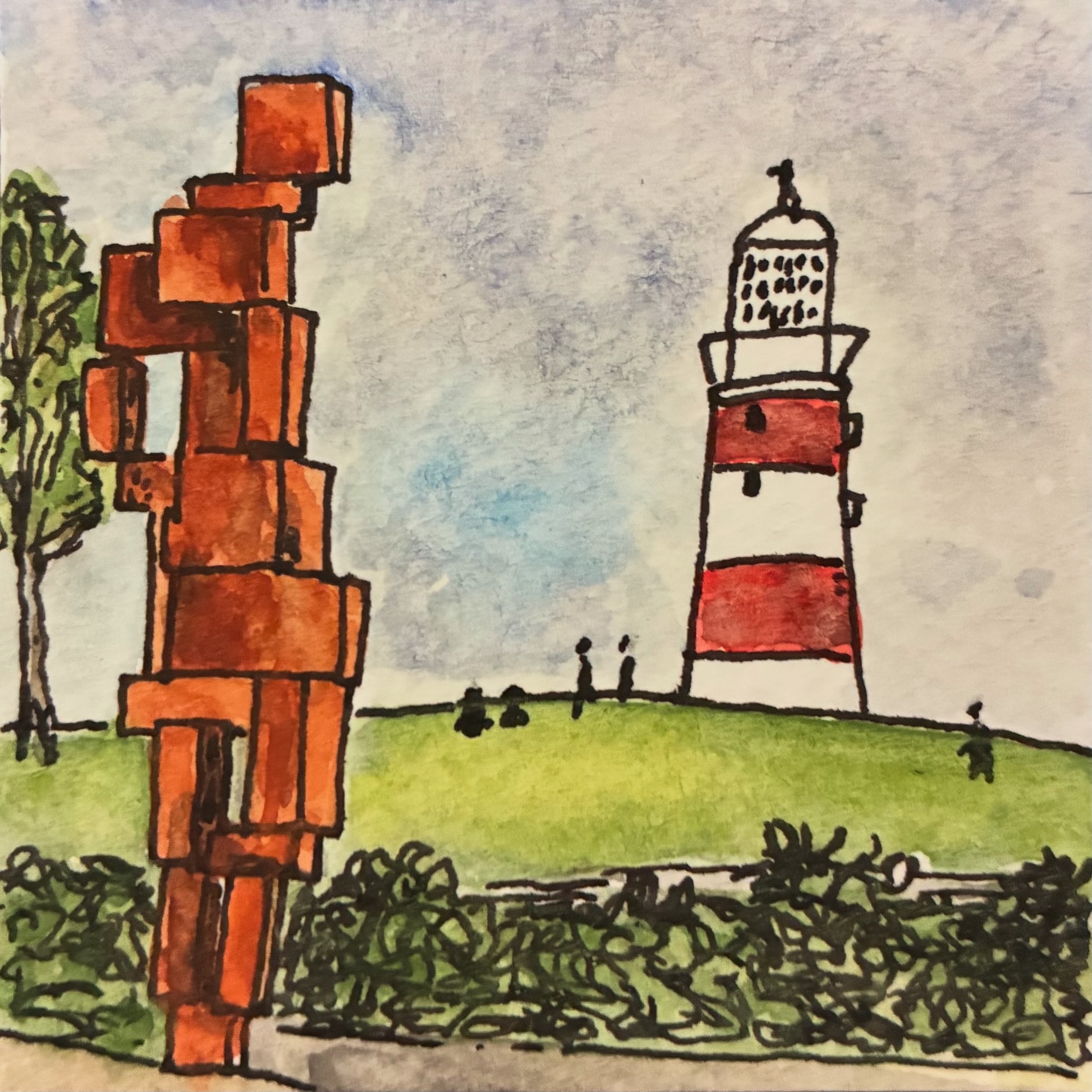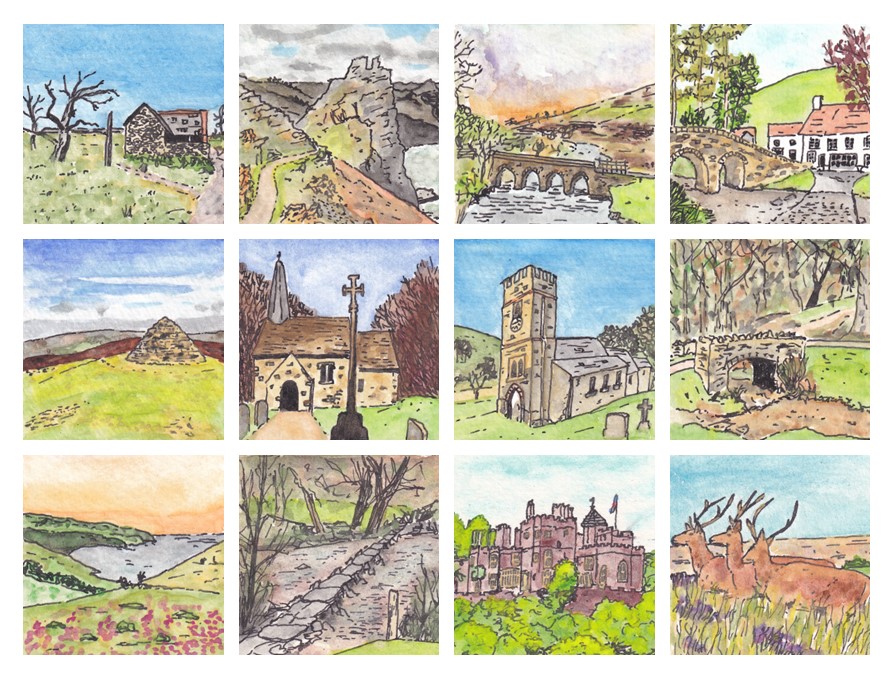
Foundations #poem

Do not start at the top
With no foundations
For another shattered dream
Built in a rush
One of many
Born from a momentary spark
To lie in tatters
As it tumbled down
During a hurried build
When mistakes were made
And no-one saw

The monument to creativity.

All can see
The fruits of careful labour
With no mistakes made
BLOCK after BLOCK after BLOCK
Then BLOCK after BLOCK after BLOCK.
BLOCK after BLOCK after BLOCK
Then BLOCK after BLOCK after BLOCK.
BLOCK after BLOCK after BLOCK
In even layers
With staggered joints
Placed with special attention
Positioned just so
The slab sitting level
The piles well bedded
With strong foundations
Start at the bottom and work upwards

(c) Tim O’Hare, December 2023


About this poem: This is another poem that took shape in my head while I was out for a run. It is inspired, at least in part, by the film ‘Locke’ that I watched a few years ago and has stayed with me ever since. The film follows a single character Locke (played by the actor Tom Hardy) as he drives home from work – a building site – the night before a huge delivery of concrete that will form the foundations of the building. Months of planning and preparation have gone into getting the build to this stage and it is Locke’s job to oversee the complex process of the concrete pour. The story takes place almost entirely within Locke’s car and consists of a series of telephone conversations during which events unfold that leave all of his best laid plans in tatters. For while he was focusing all of his attention on getting the foundations of the building right, he neglected to consider those that underpinned his life. It’s a great film and one I often recommend whenever a conversation turns towards the subject of foundations.

Quantock Paintings – Part 2 #art

Following on from my previous art post (Quantock Paintings – Part 1), here are a few more of the paintings that I did during, or shortly after returning home from, our short break in Crowcombe, at the foot of the Quantock Hills in Somerset, last June.

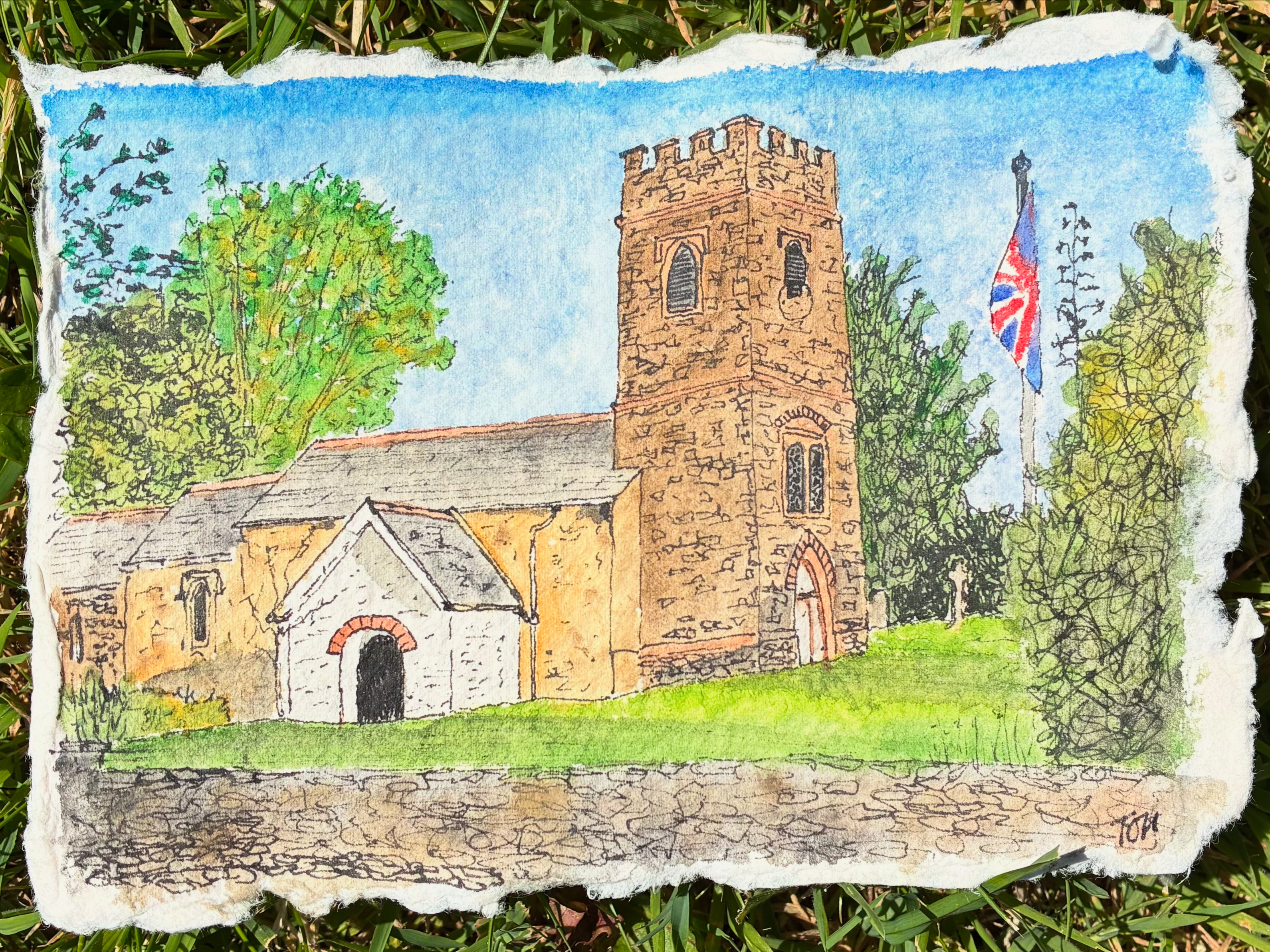
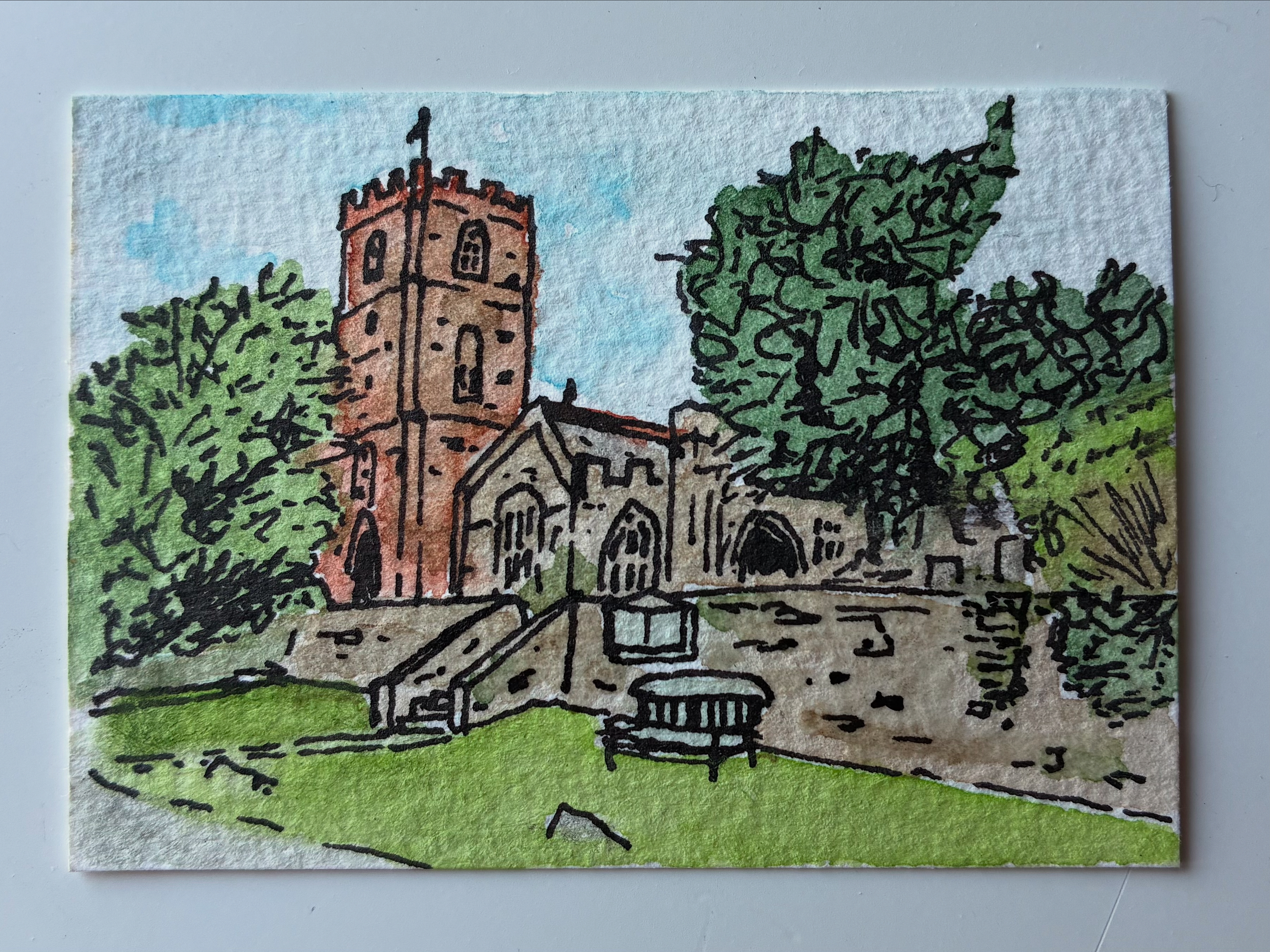
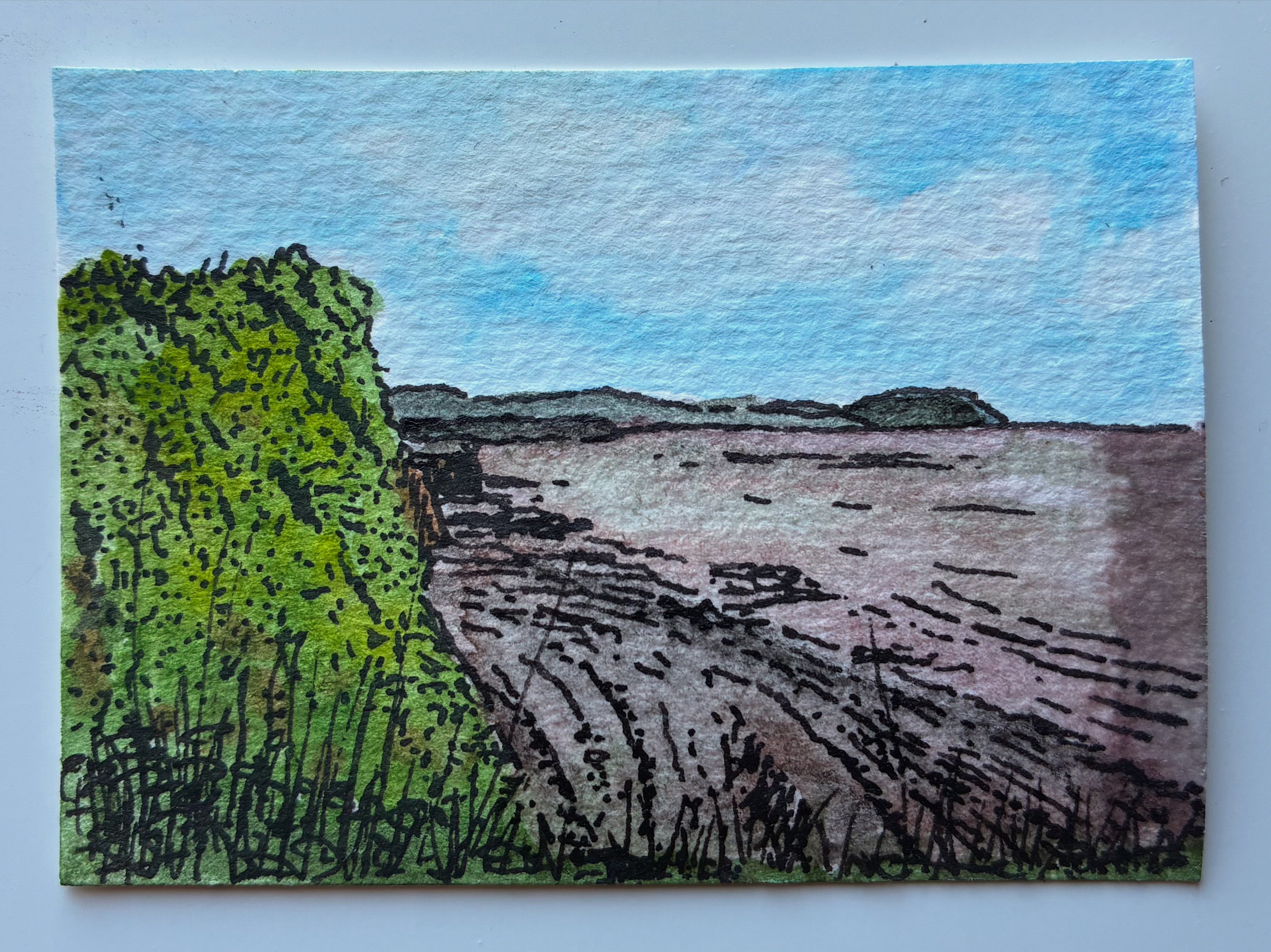
First, here are a couple of pictures depicting views from walks that we did. Both are in my ‘normal’ style, a simple ink pen sketch with the watercolours added on top. I think that I have a tendency to try to put a lot of detail into my drawings (at least until I get bored and start scribbling in trees and foliage), but I am conscious that with painting it is often a case of ‘less is more’. In these two pictures I think that I managed to hold myself in check and kept the drawings fairly simple and ‘loose’. The pictures show Crowcombe Church and a view of the coastline at East Quantoxhead…

Crowcombe Church
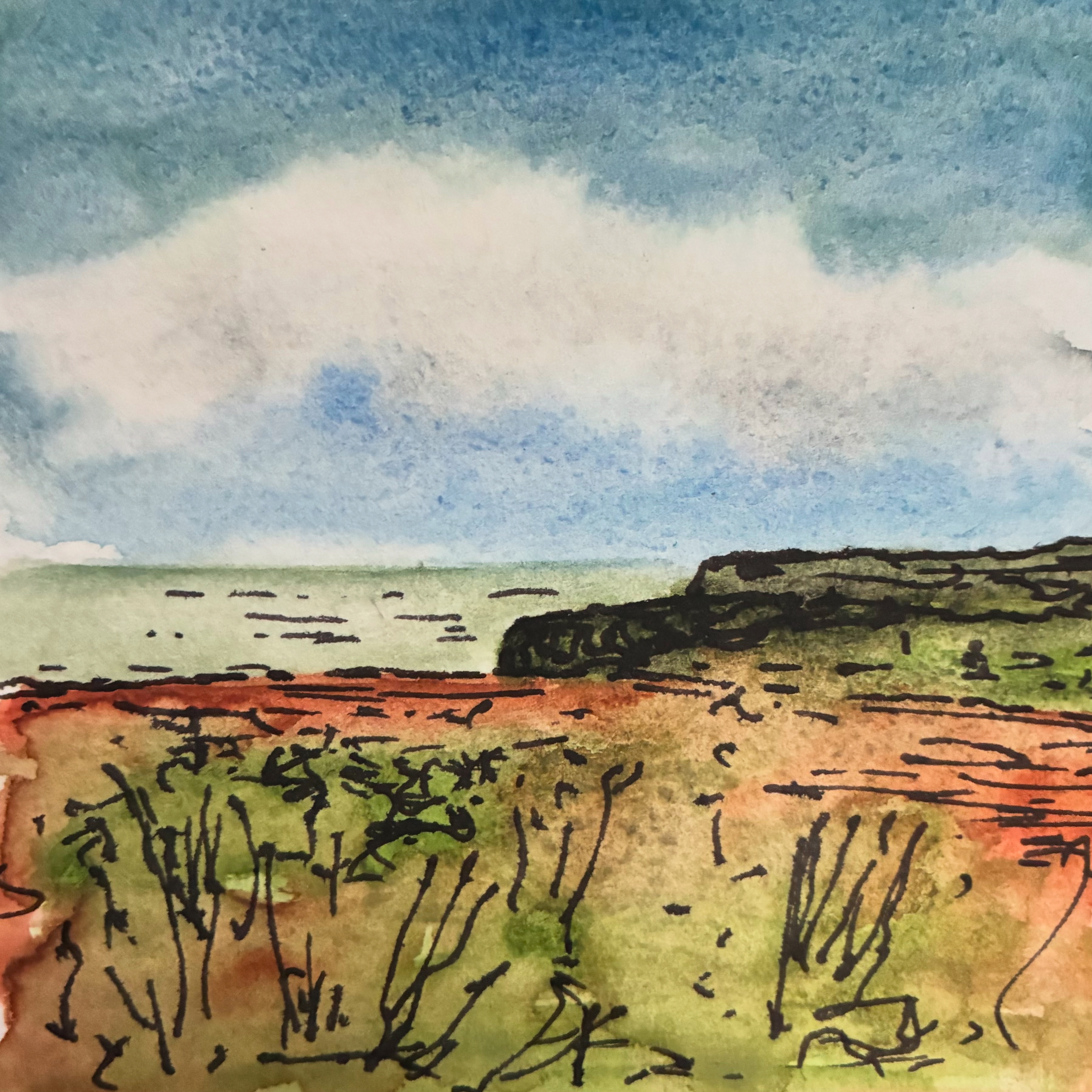
View of East Quantoxhead (with a bit of an issue on the right-hand edge!)

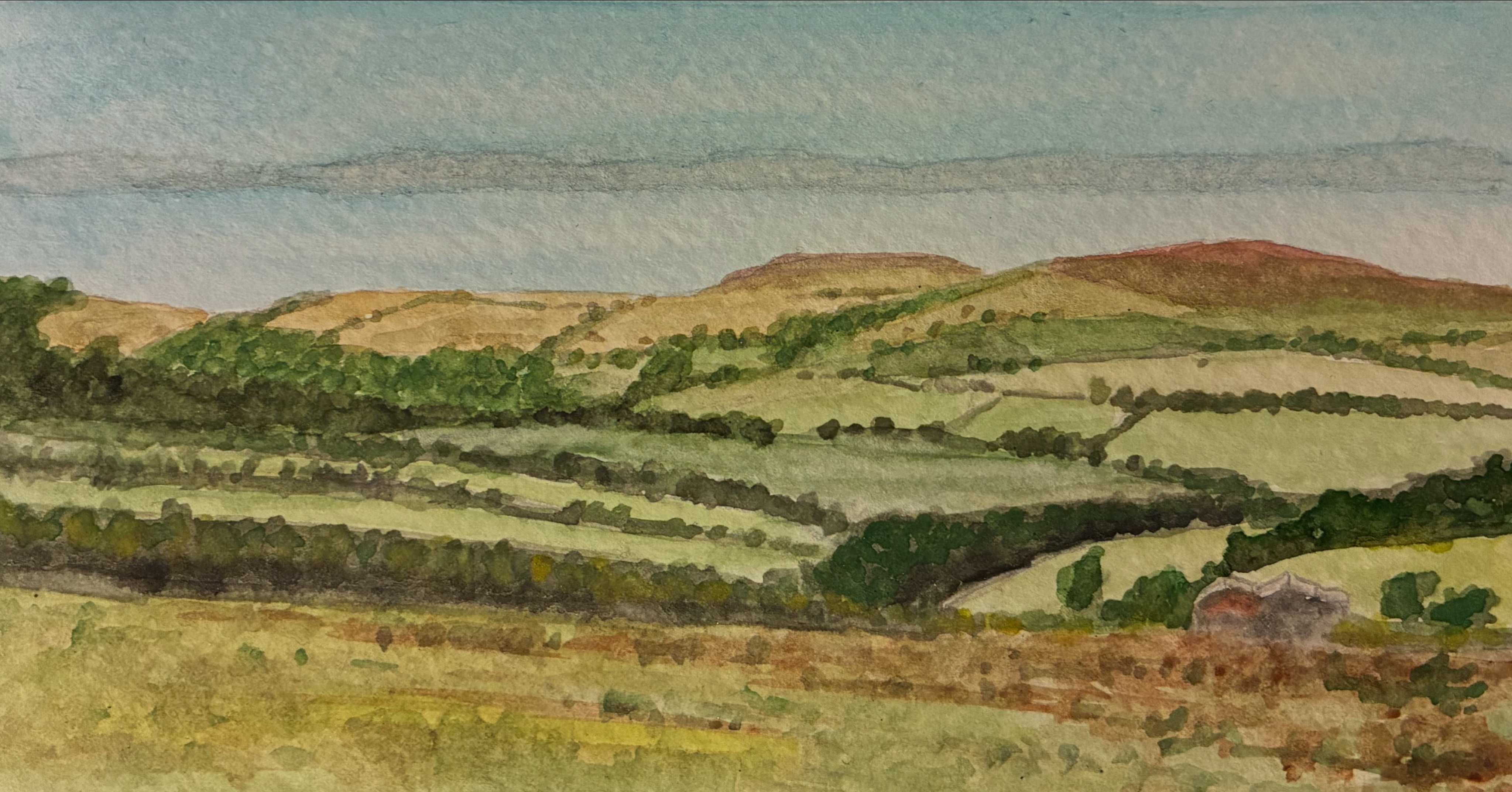
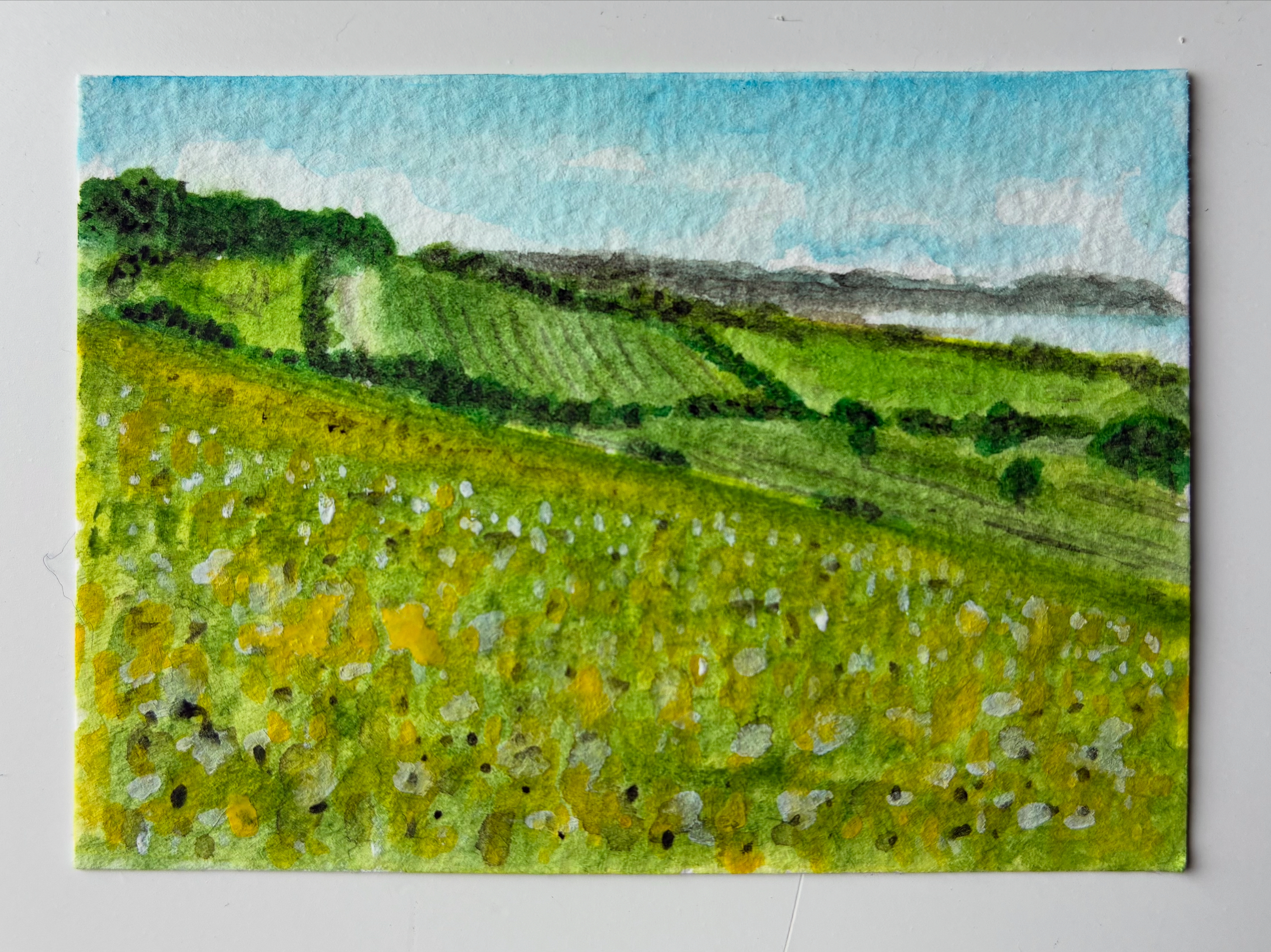
Next, I’ve included the results of an attempt to play with a slightly different approach, eschewing entirely the use of an ink pen to create a base sketch, and instead, going straight for the watercolour paints. I think that in many people’s minds, traditional (true?) watercolour paintings use only paints, generally placing these on a much wetter surface than I use, but I’ve not had any artistic training whatsoever so that’s not how my work has evolved. This picture shows a view from another of the walks that we did, looking west towards Minehead across hedge-lined fields with a riot of wildflowers in the foreground…

Somerset Fields with Wildflowers (no ink)

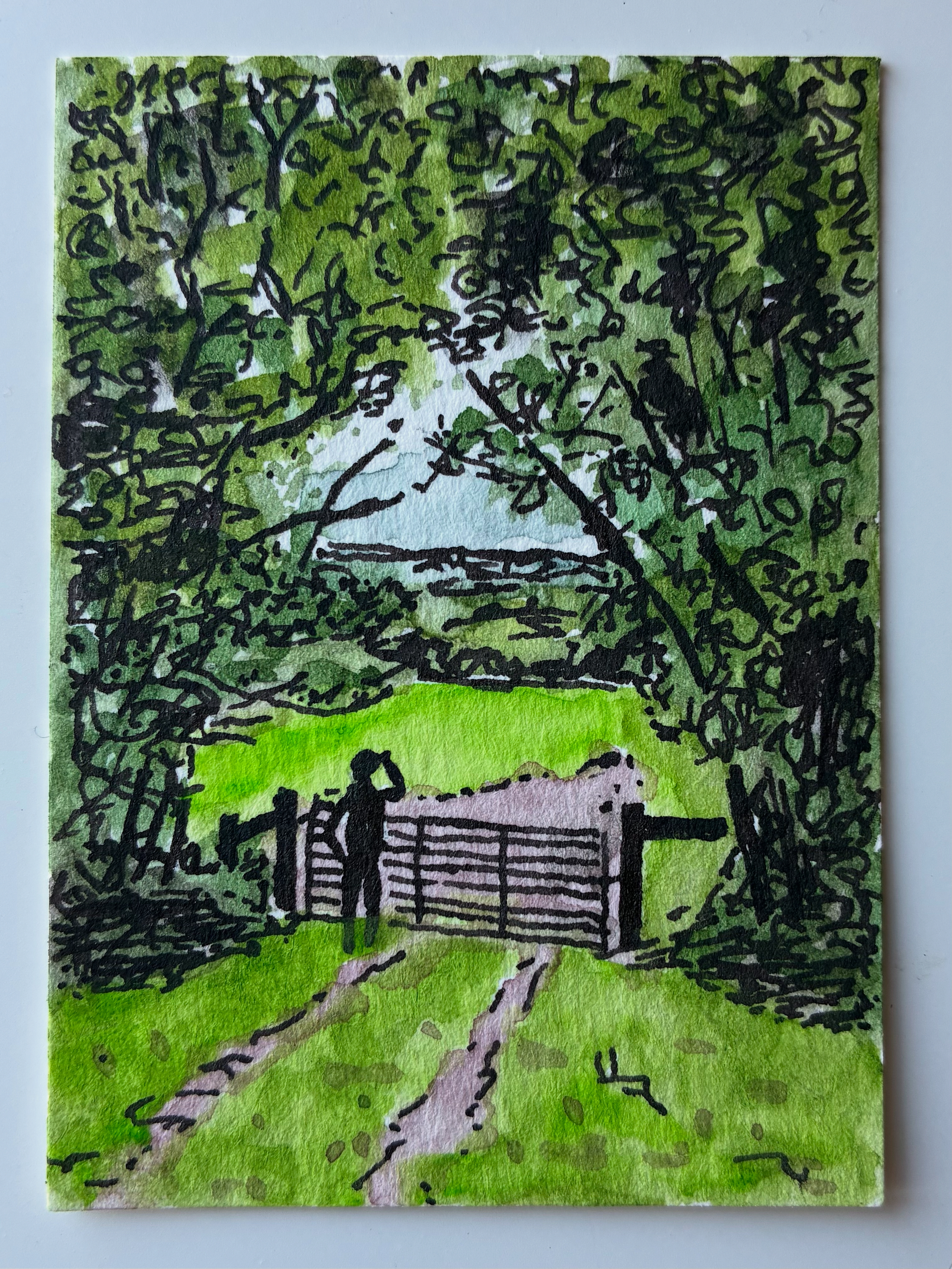
The vast majority of my paintings are of landscapes in one form or another. This is partly because I like landscapes, but also partly because whilst I might be able to make a decent fist of painting trees, fields, hills and buildings etc., I’m pretty much hopeless at drawing and painting people and animals. So, the picture below is a little unusual because it features me, standing at a gate looking east from the main ridge of the Quantock Hills. I like this picture because it is a bit quirky, with some nice ‘busy’ trees, but I don’t think it does anything to improve my reputation as a painter of people!

Through the Trees

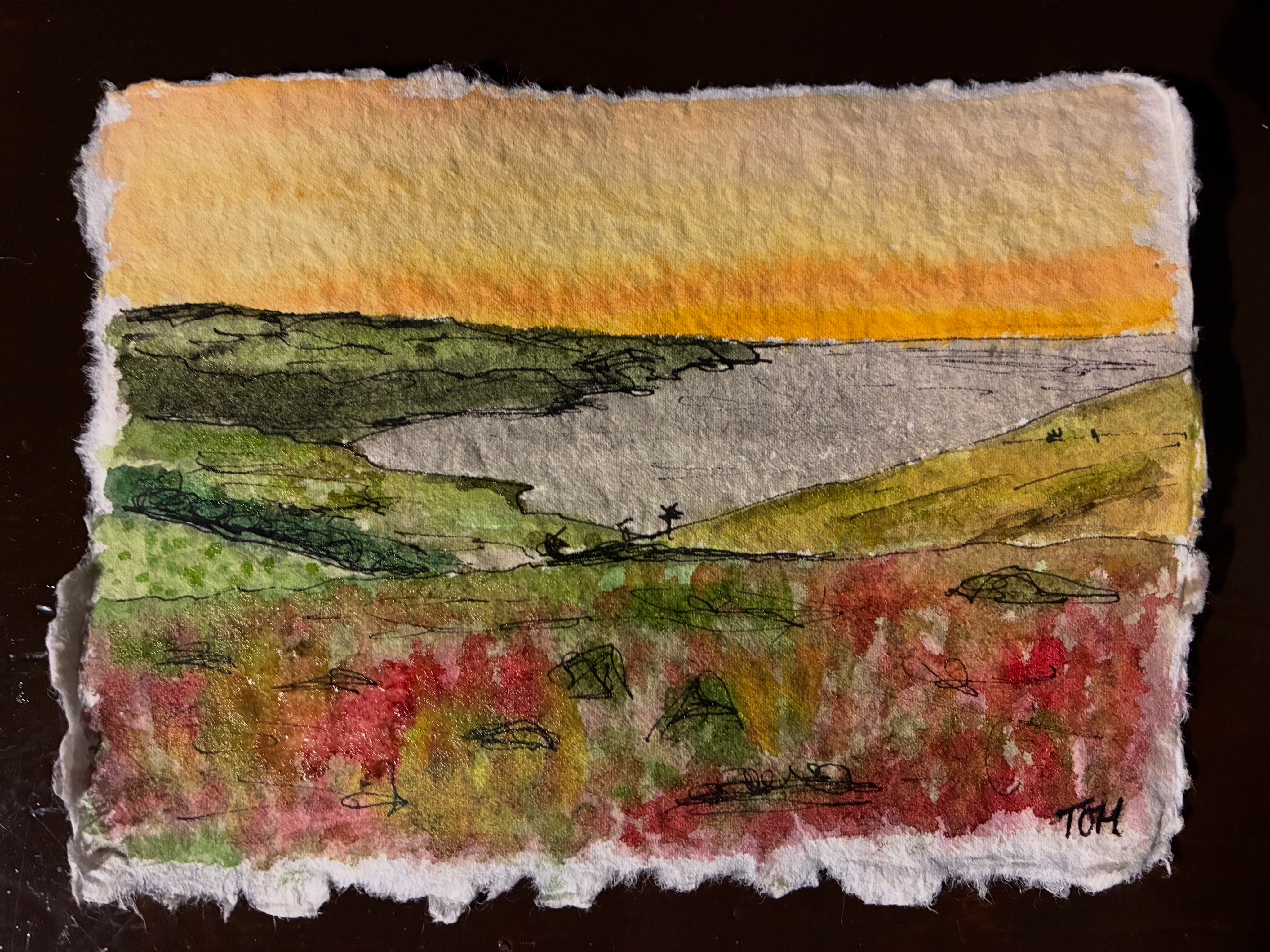
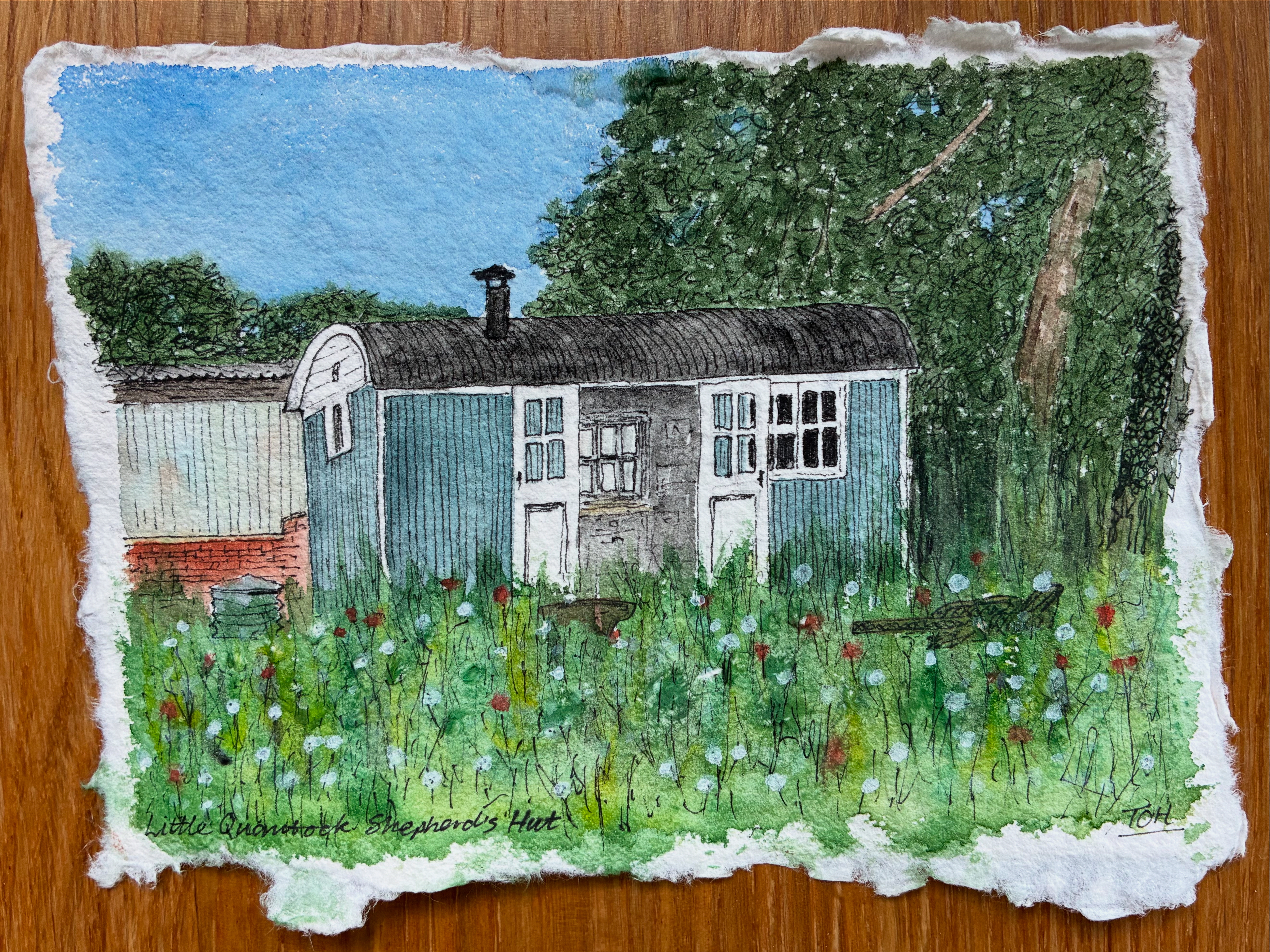
Finally, it’s become a tradition now that I paint a picture showing whatever accommodation we have stayed in when we are away, which we then leave behind as a thank you to the owner of the accommodation. In this case, we were staying in a delightful little Shepherd’s Hut, with a sunset view towards Exmoor. Now, for me to describe a Shepherd’s Hut as ‘delightful’ is something of a miracle, but although the picture doesn’t capture the view, I think it does capture something of the charm of the place.

Crowcombe Short-Break Shepherd’s Hut

I’ve written this post almost exactly one year on from our stay in Crowcombe, and it’s been nice to look back on these pictures and be reminded of a really pleasant few days in a quiet and beautiful part of the world.

A Whole Life – Robert Seethaler #reading

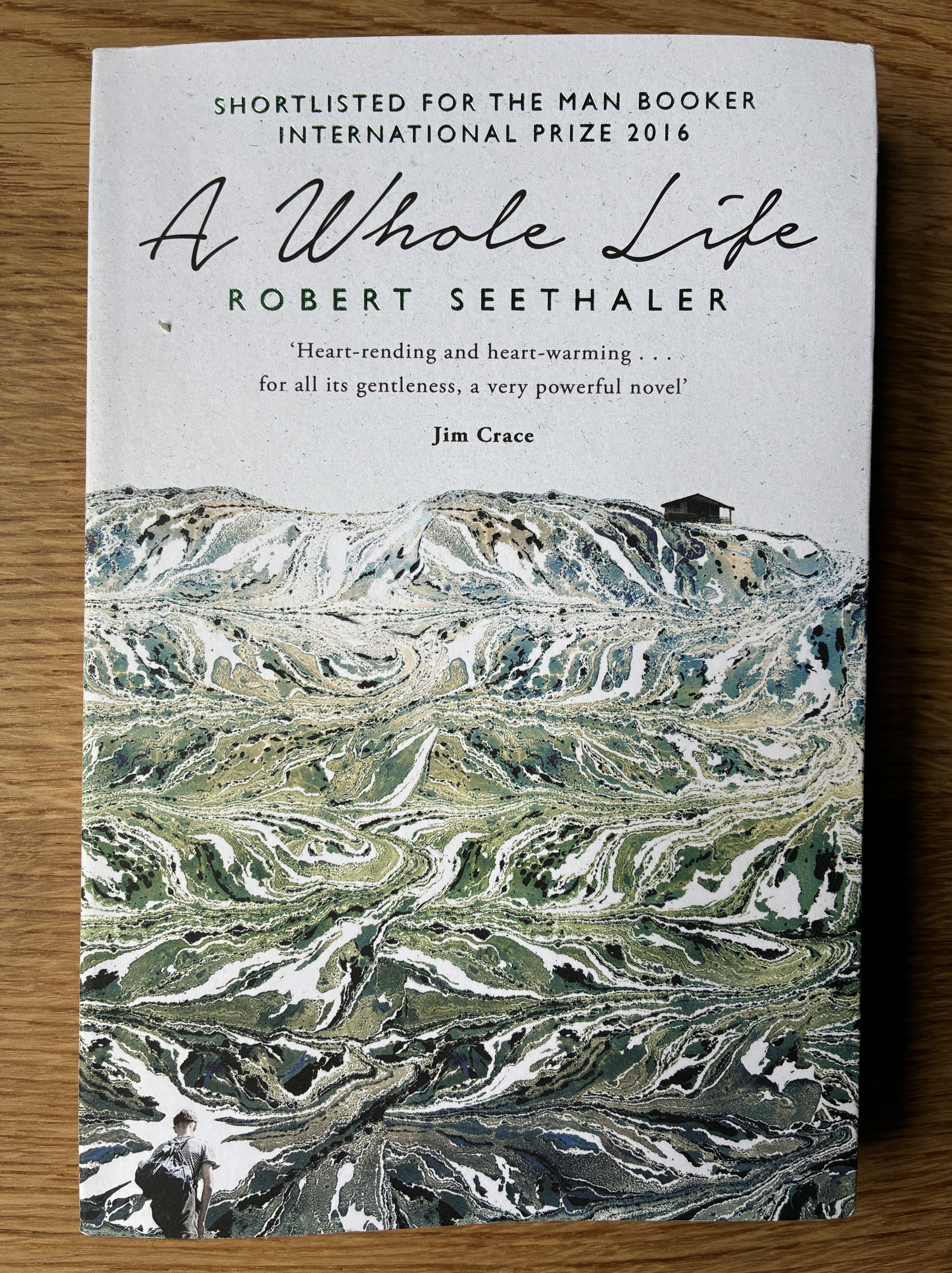
I read Robert Seethaler’s novel A Whole Life last summer, after it was recommended to me by a student that I teach (a recommendation that shows a remarkable level of insight from someone who doesn’t really know me or much about my life at all). Published in 2015, and shortlisted for the Man Booker Prize in 2016, A Whole Life is, on the face of it, a simple story, recounting the life of Andreas Egger – a life that plays out almost entirely in a single valley in the Austrian Alps. It’s one of those stories within which nothing much happens and yet, in a strange way, everything happens; and everything that does happen has a significance and depth that gets right the heart of what it is to live.

Andreas Egger is born between the two world wars and arriving in the valley as a young boy is taken in by a farming family. Somewhat surprisingly, given his rather gruff and lone manner, he falls in love and marries, but the promise of a happy life shattered by when an avalanche strikes his home. He leaves to fight in the Second World War, is taken prisoner and eventually returns home only to find that a rush of development has spread its tentacles into the remote terrain of his world. He does what he needs to do, and works as an engineer building and maintaining the cable cars that have come to the area as skiing begins to grow into the modern tourism industry it is today.

Egger’s life has moments of brightness, or perhaps it is better to say that it promises moments of brightness, but the overall tone of the book is somewhat bleak and foreboding from the outset. Egger makes it through to the ripe old age of almost eighty, but throughout his life it is clear that he is always an outsider, never really integrated into the close community, never fully adjusting to the ever-changing world around him, and never being able to fully experience the loving relationships that at one point seemed to lie ahead for him.

I really enjoyed reading A Whole Life. Seethaler’s writing is precise and unfussy and through his words, it felt like an honour that Egger was sharing his existence, his whole life, with me. There were a couple of passages that stood out for me, to the extent that I grabbed hold of them as I read. The first (page 112 in my edition) captures something of Egger’s quiet, contemplative quality:

Egger didn’t usually speak on his walk. ‘When someone opens their mouth they close their ears,’ Thomas Mattl had always said, and Egger was of the same opinion.

and the second nicely illustrates the kind of philosophy that Egger absorbed by keeping his mouth shut and his ears open, in this case from a fellow inmate in a Russian prison camp:

If you’re on the way to Hell, he’d say, you have to laugh with the devils: it costs nothing, and makes the whole thing more bearable.

I don’t think it would be a bad thing to embrace some of Egger’s calm, just-get-on-with-it, approach to life. And whether I’m on the way to Hell, Heaven, or (more likely) somewhere in between, it surely does make sense to laugh with whoever you are travelling alongside.

How I killed my blog post writing streak #other

Last year, despite not really knowing why (i.e. who I was writing for other than for myself) I decided to make a concerted effort to get into the habit of writing posts for this website on a reasonably frequent basis. By reasonably frequent I was hoping to add three or four entries each week or, to borrow a phrase from the writer Oliver Burkeman, dailyish.

After a fairly slow start (four new entries in January 2025), I picked up momentum and went on to add eight in February, twelve in March, thirteen in April, seven in May, eleven in June, eight in July, and another eight August. Okay, I wasn’t hitting an average of three or four entries per week, but with five separate weeks during which I wrote no entries at all (in January, February, March, April and July) and a five week hiatus with zero entries between mid-May and mid-June, I had managed to write 71 entries in the 23 weeks in which I did produce some new words, giving me an average of just over three entries per week in those ‘productive’ weeks.

During this time period, my blog posts were split between six categories – 24 relating to my Art, 24 about books that I had read, 18 that featured my poems (transferring these across from my poetry website andapoet.blog), five about my writing, three that I described as ‘Wisdom’ and a couple that were ‘Miscellaneous’.

I was generally pleased with how I was doing, and the progress I was making. I had generated a list of topics for future posts – about the art I created, the books I had read, poems I had to add to the site, snippets about my writing, walks that I could describe etc. – which gave me no shortage of future material. Having this list ought to have been positive, indeed it was positive during the first eight months of the year. My progress continued into September, as I added another five entries in the first twelve days of the month. But then I stopped writing completely, my last entry being on 12th September 2025, some 279 days ago… a long time… over three-quarters of a year…

What changed? Did I just get bored? Did I get distracted? Did I decide that since pretty much no-one reads what I write here there simply wasn’t any point in my continuing? It’s possible that the latter was a contributing factor. It’s certainly one that has led me to question my blog writing activity before (for example see Habits, Daily Blogging… Is This The End? ), but no, those answers are not the answer…

My blog writing activity died off because I innocently did the one thing that is pretty much guaranteed to stop me doing any activity I am engaged in, or want to be engaged in. I turned a thing into a THING. This is something that I have written about on this website before, back in 2018 in fact – see: Turning Things Into THINGS. It is one of the primary ways that I sabotage my own desire to tackle an activity. Turning a thing into a THING involves taking what could be a simple, interesting, enjoyable activity, and ambitiously growing it in my mind by adding extra elements (‘bells-and-whistles’) so that it becomes a huge, enormously complicated, and/or daunting challenge that my brain then looks at and says “no thank you very much – that looks like a project that is far too difficult, and potentially painful, for me to take on”.

In the case of this blog, turning a thing into a THING took the following form. In early September 2025 I sat down, looked at my carefully curated and categorised list of potential blog post topics and decided that it would be really great to accelerate my writing so that I was fully ‘caught up’ by the end of November 2025. This was a 10 week period and I had 61 possible blog post topics on my list (many about books that I had read during the previous few months). 61 posts in 10 weeks? ~6 posts per week? That’s only one per day, with a day spare each week… sounds perfectly doable doesn’t it?

Well no, it doesn’t, or at least it shouldn’t have, but what did my brain have to say about the idea? I can tell you. In a journal entry that I wrote on Saturday 13th September I wrote the words ‘… it’s a good plan and I can try to get into a good discipline of writing daily posts on weekdays and adding one or two at the weekends if I can or if I have missed weekday posts‘. It all sounds so simple… [I’ll also note here that my had a multi-week sequence that rotated through the different categories of the possible posts in such a way that they were all nicely spread out through the entire period. If that sounds a bit over-the-top then temember, my plan wasn’t a ‘thing’, it was a ‘THING’.]

If I had set my stall out to simply to carry on writing the odd blog post when I had the chance – perhaps two or three in a good week – then it would have been an activity, a thing, that would have stood a decent chance of getting done. Instead, I turned the thing into a THING and, in the process, killed the activity entirely. To make matters worse, not only have I added nothing to this site for the best part of nine months, but during those months I have frequently berated myself for, and felt disappointed with, my lack of action. I killed off an activity I enjoyed, and I gave myself a new stick to beat myself with. Bravo!

On countless occasions over the last few months I have thought about how I might get back to writing for this blog. Mostly, my thoughts have revolved around trying to come up with new ways that I can somehow, magically, catch up with my post backlog. You see, the perfectionist/completist/collector in me hates the idea that I might not write an entry for every book that I have read, every piece of artwork I produce etc. It quickly rules out the simplest approach, which is to just start adding entries again relating to what I am up to at the moment. An incomplete sequence? A gap? No, no, NO… you cannot possibly have a gap.

But I have fought with myself for long enough, and I recognise that the choice is a simple one. I can think that I can somehow catch up and be destined to remain stuck forever (or at least far behind where I’d like to be), or I can just write something and be done with it. And somehow, unusually for me, the second of these options seems, finally, to have come out on top.

So, here I am again, back on the blog. I’d like to think that I will be able to write new posts on a reasonably frequent basis – two or three a week would be great, one or two would be okay – and I’m going to try to allow myself to write a mix of posts, some relating to ‘now things’ and others picking selected topics from the list that I created previously without requiring myself to cover them all, or to ‘catch up’ within any specific time frame or better still, ever.

Will I be successful? Well I’m not even going to try to second guess the answer to that question. To do so will surely only lead to me into making another marvellous plan in an attempt to ensure success, a marvellous plan that will actually, almost certainly, guarantee failure!

What If? So what? #poem

Sometimes I find that I cannot move forwards
to follow the path that I want to take.
The gears whirr noisily inside my head,
and The Controller shouts
“STOP. What If?”,
“STOP, What If?”,
again and again,
at the top of his voice.

Racked by doubt and paralysed by fear, I
find that I have lost my will
to continue, and so I grind to a halt – frustrated, cross,
until stillness descends, and I remember that
however wide or deep the chasm, I can build a bridge
that even only spanning imagination, offers a moment when
a step can be taken. Then, slowly, I
can make progress once more, to come
closer to where I want to go. And I and am able to
scream at the top of my voice: “So What? To hell with it.”

(c) Tim O’Hare, December 2023


WHAT IF? SO WHAT?: This poem came quickly. I was writing in my morning journal about how I had not found any time for poetry writing for several months, and starting to wonder whether perhaps this might be an indication that my well of inspiration had run dry. At the same time, I was thinking about the value of just putting my poems ‘out there’ without any expectation that they might ‘land’. Suddenly, I found that I was writing again, and this poem emerged. I wasn’t sure what to give it as a title but settled on What If? So What? based on a phrase that I vaguely remember hearing the singer Tom Jones use in an interview years ago – something along the lines that “we must always try to turn ‘what ifs?’ into ‘so whats?’”. Don’t miss the hidden message in the second verse…!

Quantock Paintings – Part 1 #art

Driftwood Cafe, Blue Anchor, Somerset

In recent summers we have take a series of summer holidays walking in the Yorkshire Dales – first in Swaledale (staying at Low Row near Reeth), then in Wharfedale (based in Ilkley) and last year in ‘Bronte Country’ near Haworth. In each case we combined our week in Yorkshire with a day or two staying somewhere en route to and from our home in Plymouth, or in one case a second week away in Norfolk and Suffolk. For a change, this year, we decided that we’d like to spread our holiday time out over the summer months, and so we picked a couple of fairly local destinations for ‘long weekend’ walking holidays and also booked five days over in Suffolk, combining this with a visit to elderly relatives and an old university friend on mine.

The first of our summer 2025 mini-break locations, in June, took us back to the very familiar territory (for me at least) of the Quantock Hills and the Somerset coast. I grew up a short distance from there in Bridgwater, and we would frequently go on family outings to the area. I also spent quite a lot of time at an activity centre in Kilve on short courses of various kinds (mostly musical).

Although I do like discovering new places, I also very much enjoy returning to familiar haunts, especially for a short trip when you want to be able to slot straight into holiday mode without having to spend time orienting yourself and getting the lie of the land. Our Somerset trip – staying in an AirBnB Shepherd’s Hut near the village of Crowcombe, tucked at the bottom of the western side of the Quantock Hills ridge, very much fell into this ‘familiar territory’ category.

While we were away we enjoyed completing a couple of lengthy walks direct from our accommodation (I particular enjoy a stay away that doesn’t involve having to get in the car), and I was able to spend quite a bit of time painting. In this post I’ll feature four of the pictures that I produced during the break, and I’ll pick up the thread with another post soon that will feature a further group of five pictures.

We started our holiday with lunch at a favourite cafe, the Driftwood Cafe at Blue Anchor – the subject of my first picture (shown at the top of this post). It’s not a fancy cafe at all – I’d describe it as a ham, egg and chips or baked potato cafe – it’s just a nice, simple, easy-going place for a quick bite to eat.

Suitably refueled we then drove the short distance to Kilve and did a short walk (~3 miles) along the coast to East Quantoxhead, before turning inland and returning to the car, with a stop at the Chantry Tea Garden at Kilve where we were the only customers and had an interesting conversation with the owner, who used to be a frequent visitor to Plymouth. The two pictures below show a view of a field that we passed on the return leg (I’ve got a thing for trees silhouetted on the horizon) and the view that we had from our table in the cafe garden of The Chantry itself and the white cottage from which the cafe was run.

Grass Cut Field Near Kilve, Somerset
The Chantry Tea Garden, Kilve, Somerset

Finally, for now, here’s a scene I painted of the view looking west in the direction of Exmoor from the base of the Quantock Hills. I’ve tried to capture the way that there are successive ‘layers’ of rolling hills as the eye moves towards the horizon, each becoming progressively just a little higher than the previous one. Although wild landscapes can be exhilarating, I do like a farmed landscape – a patchwork of fields, hedges, copses and the odd farm building.

Somerset Fields Looking West From Near Crowcombe

All of these pictures were really just quick ‘practice’ pieces, but I like them all in different ways – Driftwood Cafe for its small details, the grass-cut field for its slightly abstract form, Chantry Tea Garden for its looseness, and Somerset Fields for the way it captures something of the wide expansiveness of the view.

If you have a favourite of these four pictures write a quick comment to let me know!

Swallows and Amazons – Arthur Ransome #reading

I listened to the audiobook of Swallows and Amazons, Arthur Ransome’s classic novel for children during the period from late March through to early June this year. It was a fairly long process, almost 9 hours of listening, accomplished mostly on my walks to and from work. There were two reasons for my choice of listening, the first linking to my desire to read explore more novels for children as I tried to find stories that were in any way comparable to my own attempt at a children’s adventure story (something that I have written about in my post on Cornelia Funke’s book The Thief Lord), and the second being that Swallows and Amazons was a suitable ‘R’ pick as I worked my way, for the second time, through an alphabet of author surnames in James Mustich’s wonderful book ‘1000 Books To Read Before You Die’.

Swallows and Amazons is, of course, a very well known title, and for many people it is a much-loved one. But despite its name being very familiar to me, I had never previously read a single word of it. I had a vague idea of what it was about – a bunch of kids having adventures on a boat – but for some reason I thought it was set in the Norfolk Broads rather than the Lake District.

The story revolves around the adventures of four siblings, conveniently, to give a nice balance, two boys and two girls – John, Susan, Titty and Roger – as they spend a summer holiday camping on an island in the middle of a lake and sailing their boat, Swallow, around and about each day. Published in 1930, the children unsurprisingly fall into neatly gender-stereotyped and age-constrained roles, John is very much the responsible old-head, and, naturally, captain of the Swallow. Susan, next oldest, and mate of the Swallow fulfills the ‘mother’ role, taking great care and pride in keeping their camp tidy, preparing meals and keeping the younger children in order. Titty, the younger sister, is the Able Seaman and, it turns out, a little bit of a rebel (the privilege of youth!). Finally, Roger, the baby of the family and ship’s boy, is very much treated as the youngest – being taught how to swim, sometimes being allowed to stay up late or accompany the others as a special treat, and frequently falling asleep.

The main action in the story involves the Swallows interactions with two local children, Nancy and Peggy Blackett, captain and mate of their own boat Amazon, and very much portrayed as rather unsophisticated and down-to-earth locals, in comparison to the rather ‘smart’ Walker children. Initially, the relationship between the Swallows and the Amazons is somewhat hostile but, as you might expect, they end up joining forces, first against the Blackett’s uncle James, who lives in a houseboat on the lake and seems to be inexplicably grumpy and awkward, and then against some rather unsavoury characters who they become embroiled with. Throughout the story it is very much John and Nancy who are held up as the masters of the craft of sailing their boats and leading the adventures, but in the end it is young Titty who turns out to be the real star.

Listening to the audiobook of the story was quite an odd experience. The attitudes and happenings of the story are very dated, and I will admit that the constant references to Titty took some getting used to. The story is absolutely chock full of nautical references to the extent that practically everything the children do is rendered in nautical-speak – for example, everyone else is a pirate or a landlubber, they are constantly jibing or backing the mainsail or trimming the freeboard, and everything they drink becomes grog. All of these things – the datedness, the setting, the obscure language – left me wondering how it could be that, more than 90 years after its publication, Swallows and Amazons is still often lauded and recommended as a story for modern children. Perhaps there is some innate craving for a return to the semi-wild that a child can connect with, even if they (probably) haven’t got a clue about one end of a boat from another, and almost certainly have no idea whatsoever what ‘pemmican’ is!

So did I enjoy Swallows and Amazons? Would I recommend it?

Well, let’s be honest, Swallows and Amazons wasn’t written to entertain an almost 60 year old man with limited interest and experience in sailing, reading it 95 years after it was set and published. It’s probably not surprising then, that I would have to say that I was left underwhelmed… But maybe if I was 12 years old with my thoughts turning to imagined adventures and challenges, and yearning to escape from the constraining influence of the adults in my world I might have felt differently. Then perhaps, I would have leapt onboard at the chance to join John, Susan, Titty, Roger, Nancy and Peggy as they hoist their flags, cast off and allowed the wind to fill their sails and send them racing across the lake in pursuit of their next adventure!

Mevagissey #art

I painted this little watercolour picture of Mevagissey harbour back in June. I was looking to paint a picture to use for a birthday card for the son of one of my wife’s best friends, and brother to one of my elder daughter’s closest friends (by which I mean that the son was also the brother!). As it happened, a couple of months previously, his mum had seen some of my pictures when visiting our home, we got talking about art, and along the way she told us how he had surprised her by saying that when he finally got his own place to live (he’s in his mid/late 20s) he wanted to have pictures of two places that were special to him – Pew Tor on Dartmoor, close to their home in Tavistock, and Mevagissey in Cornwall.

As the date of the birthday approached I started to think of painting one of my ‘special place’ pictures for his card. The trouble was, I was faced with a choice, and anyone who knows me well will know that one thing I am not good at dealing with is choice. It’s tempting to think that choice is a good thing, and I am sure that I would say that I’d prefer to always have a choice than not, but in many ways I’d find life a lot easier if there was a little creature sitting on my shoulder, or tucked into my sleeve, whispering to tell me what to do all of the time.

Should I paint Pew Tor or should I paint Mevagissey?

I’d painted a larger picture of Pew Tor back in early March and knew that I could produce something smaller but similar that would work as a birthday card. I’d also painted various places in Cornwall as part of my Cornwall Landmarks Miniature Watercolours Series. But I’d never tackled Mevagissey… So, one morning I took a small piece of watercolour paper, performed a quick Google search for a suitable photograph, and set to work.

I like the results of my effort – the painting that introduces this post. The picture I chose was a fairly busy scene, with the quayside at Mevagissey backed by all kinds of interestingly shaped and coloured buildings, a host of colourful boats moored at the water’s edge, a pair of rather striking light-blue benches towards the right of the scene, and the bright yellow fishing boat pulling out confidently towards open waters. It was a picture that provided lots of splashes of colour that give the painting a nice sense of aliveness I think.

But, in the end, it was Pew Tor that won the mental tug-of-war that was taking place inside my head. I put my little Mevagissey picture, really just a test piece, to one side, and opted instead for the Dartmoor ‘special place’ rather than the Cornish one. If you are reading this soon after it was originally posted (on 9th September 2025) and want to see the Pew Tor picture that I ended up using, then you’ll just have to visit this site again in a few days time… because if all goes to plan I will post it here soon. For now, you’ll just have to enjoy a quick trip to Mevagissey – a perfect example of the many picturesque little harbour towns that line the southern Cornish coastline.

Wild Courage – Jenny Wood #reading

In the early months of this year I read and heard several references to a soon-to-be published book: Wild Courage by Jenny Wood. My interest was piqued further after I viewed a Livestream of an episode of the podcast ‘A Productive Conversation‘, in which the host, Mike Vardy, chatted with the author about her book (A Productive Conversation: Episode 611 – Jenny Wood talks about wild courage and fearless self-advocacy). I duly ordered the book and began reading it soon after it arrived on my doorstep, optimistic that it was going to be an interesting and enjoyable read.

Wood’s basic idea is that in order to progress we need to have courage – to push through fear of the unknown, fear of discontent, fear of failure and fear of judgement by others. She argues that successful people feel, but put aside, all of this fear, becoming their own strongest advocate, and having the courage to take whatever steps are necessary to advance towards their goal(s).

The distinctive feature, or twist, in Woods espousal of this feel the fear and do it anyway approach to life is that she identifies nine traits that generally hold negative connotations, and then recasts each of them as a type of courage that the reader is encouraged to develop and deploy. The nine traits, and their associate courage, are as follows:

  • WEIRD – the courage to stand out
  • SELFISH – the courage to stand up for what you want
  • SHAMELESS – the courage to stand being your efforts and abilities
  • OBSESSED – the courage to set your own standard
  • NOSY – the courage to dig deeper
  • MANIPULATIVE – the courage to influence others
  • BRUTAL – the courage to protect your time and energy
  • RECKLESS – the courage to take calculated risks
  • BOSSY – the courage to listen and lead

I don’t think there’s anything wrong with this approach, in fact I think it provides an interesting route into thinking about this territory…

(can you tell that there’s a but coming?)

…but what I wasn’t expecting from the book, and what disappointed and annoyed me as I read it, was the way that at every turn Wood focused on deploying all of this courage in one area only – career advancement and promotion – so much so that I was left feeling rather battered by the notion that this is the only thing that really matters in life.

At various points in the book I found my anger rising as Wood gave precisely the kind of advice that I detest. For example, in Brutal she instructs readers to ‘let the tree fall‘, i.e. to skip ‘unimportant’ tasks quietly. She suggests that ‘if they’re actually necessary, they’ll come around again, and you’ll have been busy doing unambiguously important work in the meantime.‘. To this I say ‘no, no, no‘. There is nothing more annoying than colleagues who fail to respond to simple requests for information citing the ‘if it’s important I’ll be asked again’ line of reasoning… It’s selfish, inefficient, and plain and simply rude; it says to the person who has sent the request that their time is not important and that it is yours to waste. No, just respond to the request promptly and don’t force people to keep track of your lack of response and to ask twice, or however many more times it takes to rouse you out of your own little world… [rant over]

I also found Wild Courage to be guilty of over-using the ‘personal story’ approach to illustrating the points that were being made. Perhaps some readers like this kind of thing. The odd personal story is fine, I think, but please sprinkle in a few from different scenarios, different worlds, other people etc., so that not every example is drawn from the world of working for Google.

In the end, I found myself frustrated by my reading of Wild Courage. It’s not that the approach and the ideas contained in the book aren’t valid. In the end, the courage that might stem from embracing each of the ‘negative’ traits can be expressed in a nice, succinct and positive manner that has much wider application that career advancement simply by putting the word courage to one side in each phrase. Then, the lessons that flow from those nine traits become a simple set of instructions:

  • stand out
  • stand up for what you want
  • stand behind you efforts and abilities
  • set your own standard
  • dig deeper
  • influence others
  • protect your time and energy
  • take calculated risks
  • listen and lead

which to my mind is a whole lot easier to absorb and a lot more useful than getting caught up having to justify the adoption of those negatively associated words, spinning the idea of courage out of them and suggesting that there is something a little wild about doing so. And what’s more, it’s a set of instructions that is clearly applicable to almost every aspect of life and not just the narrow, corporate-career-focus that Wood chooses to target.

Tim O’Hare Art is open for business! #art

Over the last couple of months I have been gradually gearing up to start trying to sell some of my artwork. Obviously, I am not thinking that there will be crowds flocking to part with their hard-earned money to the extent that I might become rich through my artist endeavours. Rather, people who see my pictures often pass comment that they think I could sell them, and the inquisitive part of me thinks that it will be interesting to find out whether that is true, and if it is, which pieces of my output people like enough to pay for. [Okay, okay – I admit it – I’d also love to have the implicit praise and external validation that would come my way if my artwork attracted interest in this way… but I know that it’s far better for me not to get hung up on this aspect of things and, instead, to focus on simply enjoying the process of creating art and then allowing it to leak out into the world.]

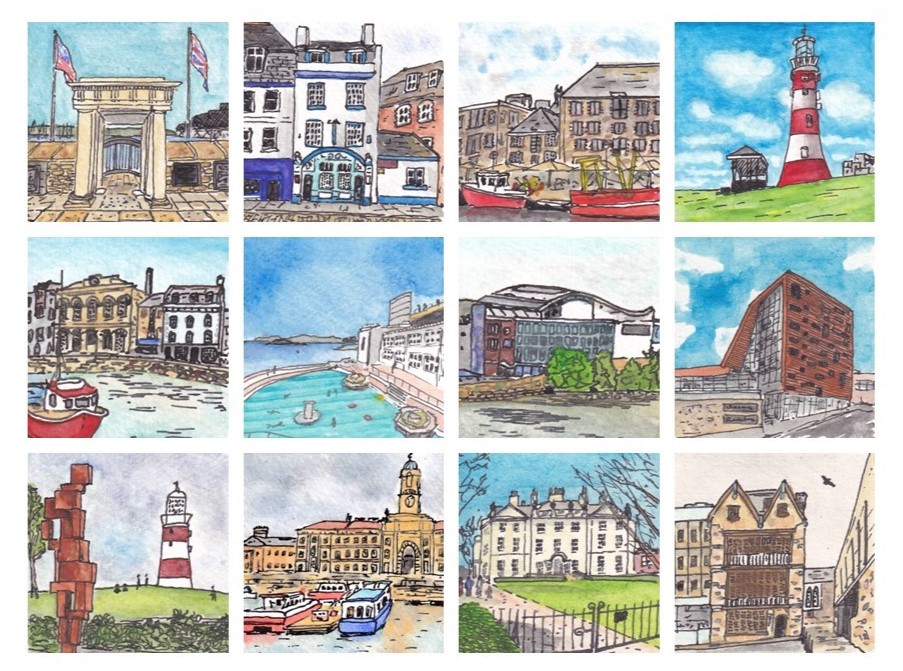
So far, my art selling has only gone as far as listing prints of my Dartmoor Stone Circle painting on eBay (two copies sold, albeit to the same buyer, in almost four months…) and, more recently, to set up an online shop on Etsy. In this shop I have listed my Dartmoor Stone Circle print (one copy sold) and lots of different Greetings Cards based on some of my miniature watercolour series: Dartmoor Scenes, House Plants, Capital City Landmarks, Cornwall Landmarks and Exmoor Views (of which I have sold the grand total of two: one of ‘The Forbidden City, Beijing’ from my Capital City Landmarks series and one of ‘The Roundhouse Gallery, Sennen Cove’ from my Cornwall Landmarks series). Clearly, it is slow going, partly because I need to master the art of marketing and try to drive some traffic to the shop, but also, because I doubt that there are many people shopping online for greetings cards of random places or plants! Nevertheless, it was a bit of a thrill when my phone pinged to tell me that these sales had been made..

One of the things that I wanted to make sure of before I launched my online shop was that I had all of my art-related points of contact joined up nicely. To that end, I managed to get hold of an email address and accounts on all of the major social media sites (Instagram, X, Bluesky, Facebook, Meta) that matched the name of my etsy shop (@timohareart). To help with future networking and promotion activities, I designed some business cards to convey all of this information to anyone interested. For these, I decided that I would paint a picture of Plymouth’s most iconic landmark, Smeaton’s Tower, with Plymouth Sound and Cornwall in the background to use on the front of the card. It took me several attempts to set up the picture so that I could add the name of my art ‘business’ without the text crossing the darker parts of the picture and that could be cropped nicely into a circle for use on the back of the card and on my social media accounts. The picture at the top of this post is final version.

The final form of the business card is shown below (front and back)…

… and just in case you’re reading this and are tempted to explore a little more, here are some direct links:

shop: timohareart.etsy.com
web: timohare.blog/art
instagram: @timohareart

(Instagram is probably the best social media site to see all of my artwork as I produce it, but you can find my art via the same social media handle on the other sites, although these are not all updated to the same extent.)